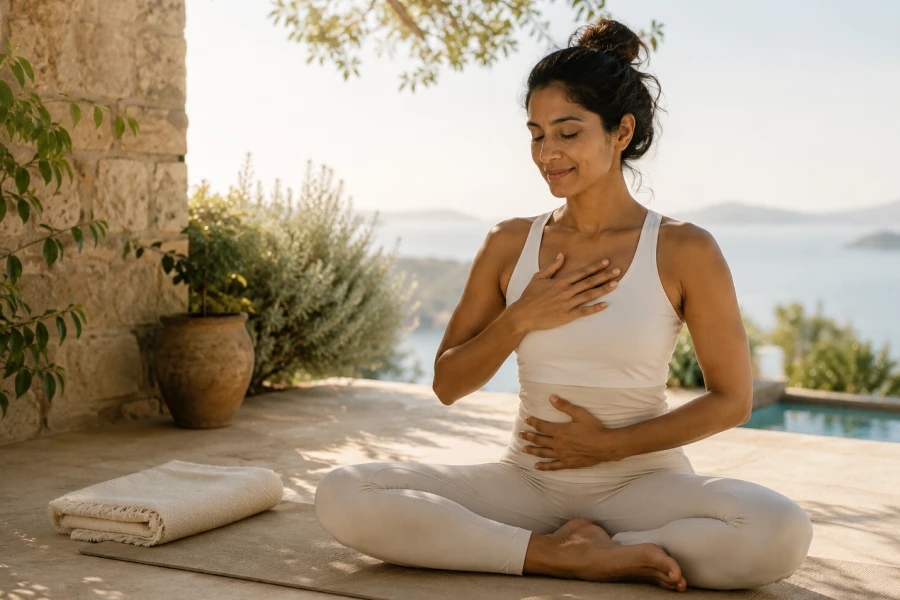
An anxious day does not always need a complicated answer. Sometimes it needs a lower-demand place to begin. A calm yoga routine for anxiety can offer that place without asking for perfect focus. The goal is not to force your mind into silence. It is to let your body notice steadier sensations. A familiar mat, a blanket, and a few minutes may be enough. You can keep the lights soft or the door open. Small environmental choices matter. They tell your system that it does not have to perform. From there, movement can become a gentle invitation rather than another task.
Safety is a better starting point than ambition. Choose one action that feels approachable right now. Sit with your back supported, stretch your fingers, or place both feet on the floor. A calming yoga practice does not have to begin with a full sequence. It can begin with permission to slow down. Notice the surface beneath you. Let your shoulders drop only if they want to. Keep your eyes open if that helps. The practice should feel adjustable from the first minute. That sense of choice can make returning easier.
The room can either increase demand or soften it. Clear only the space you plan to use. Turn down one unnecessary sound. Place a folded towel where you can reach it. You do not need an elaborate setting. You need fewer decisions. A familiar corner often works better than a perfect room you rarely use. Let natural light remain if it feels reassuring. Choose a visual point that does not pull your attention. These small conditions help the practice feel more predictable; predictability can be calming when your thoughts are moving quickly; make the setup simple enough to repeat on an ordinary day.
Familiar shapes reduce the pressure to figure things out. A supported child’s pose, seated side bend, or slow Cat-Cow can feel easier than a new sequence. Keep the range of motion modest. Let the movement match the day, not a picture in your mind. A grounding yoga sequence gives you a few reliable choices when concentration is limited. Return to the same shapes often enough that they become recognizable. Familiarity lowers friction. It also makes it easier to notice what actually feels supportive. You do not need many poses to create a meaningful practice. You need a few you can trust.
Speed changes the emotional tone of movement. Slow transitions give your attention more places to land. Pause between shapes instead of rushing toward the next one. Notice your hands as they reach the floor. Feel the shift of weight through your feet. Let effort stay well below strain. A quieter pace can make a short practice feel complete. It can also reveal when a position is too much today. There is no benefit in forcing a sensation that feels sharp or unsafe. Let comfort set the tempo; the practice becomes more useful when your body trusts the pace.
You do not have to begin standing. A chair, wall, or cushion can become the first support. Try seated twists, shoulder rolls, or a folded-forward rest. These options make the routine more available during a demanding day. Use gentle yoga sequence when you want a simple order without extra decisions. Keep your feet grounded if lying down feels too vulnerable. Add a blanket if you want more warmth or weight. The goal is to make the first step easy enough to take. That is often the most important part. A practice that starts small can still be deeply supportive.
Breath works best when it does not become another demand. Begin by noticing the exhale you already have. Let the next inhale arrive without pulling it longer. Some people prefer a quiet count. Others do better following the natural rise of the ribs. Choose the option that feels least controlling. If a breath pattern creates more tension, release it. Comfort is useful information. Keep your attention light and curious. A softer breath may arrive on its own; it does not need to be forced to be meaningful.
Your needs may shift from one minute to the next. A pose that felt good yesterday may feel activating today. That does not mean the practice failed. It means your body gave you new information. The routine can include a pause, a change of position, or an early finish. Try restorative yoga shapes when you want more support and less effort. Let the practice evolve rather than trying to make it identical every time. Flexibility in the routine can create more trust. That small change can be enough for today. That trust makes it easier to return when the day feels full.
Ending early can be a wise choice. Stop while the practice still feels kind. Notice one neutral or pleasant sensation before you stand up. Maybe your palms feel warm or your jaw feels less tight. You do not need a dramatic shift. A small change can be enough for today. For persistent anxiety, panic, or concerns about safety, professional care should lead the plan. Yoga can support wellness, but it does not replace clinical treatment. Keep that distinction clear. Respecting your limits is part of caring for yourself; a gentle ending leaves the door open for another return.
Consistency is easier when you remove the scorecard. You do not need to practice for a certain length of time. You do not need to master a pose. Pick one reliable cue that tells you it is time to begin. Maybe it is rolling out the mat or sitting near a window. Let that cue be enough. With repetition, the routine becomes more familiar. Familiarity can make anxious moments feel slightly less uncharted. The value lies in showing up with kindness. Keep the practice small enough to belong to real life; a sustainable ritual does not need to be impressive.


Leave a comment