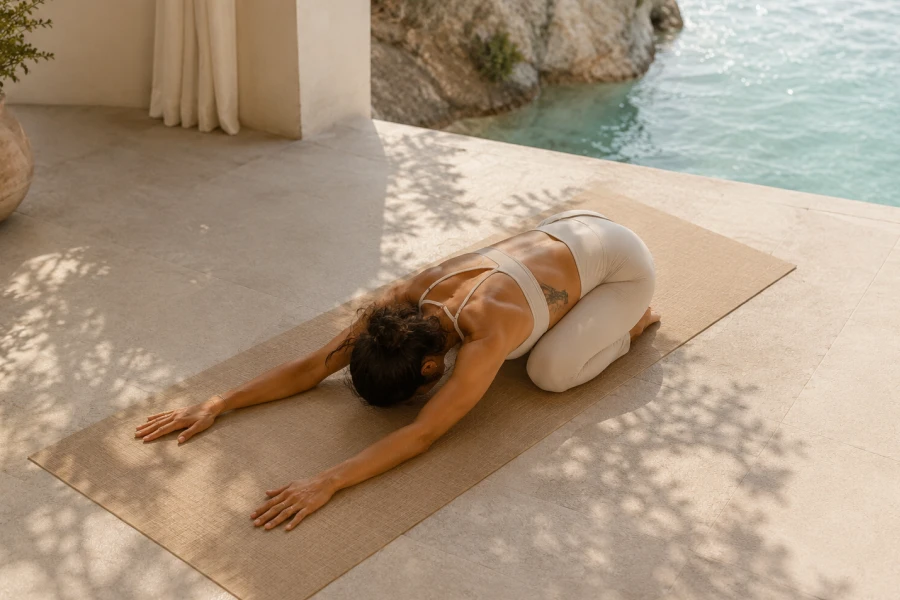
Overwhelm often makes time feel smaller than it is. A full practice may sound impossible, yet one minute can still change the next minute. Breathing and yoga for overwhelm creates a short bridge from racing thoughts to immediate sensation. You do not need to solve the entire day before moving. You only need a calmer entry point. Let the first action be simple enough to begin now. Stand near a wall, sit in a chair, or place one hand on a table. The body can become an anchor before the mind feels organized. You can stop once the moment feels more workable. That is a useful place to start.
Begin with the exact position you are already in. If you are seated, notice the chair supporting you. If you are standing, feel both feet meet the floor. There is no need to rush toward a yoga pose. The first goal is orientation. Name three things you can see without judging them. Then notice one place where your body meets a surface. This reduces the number of thoughts competing for your attention. It also gives you a concrete starting point. From there, movement can be very small; small movement is still movement.
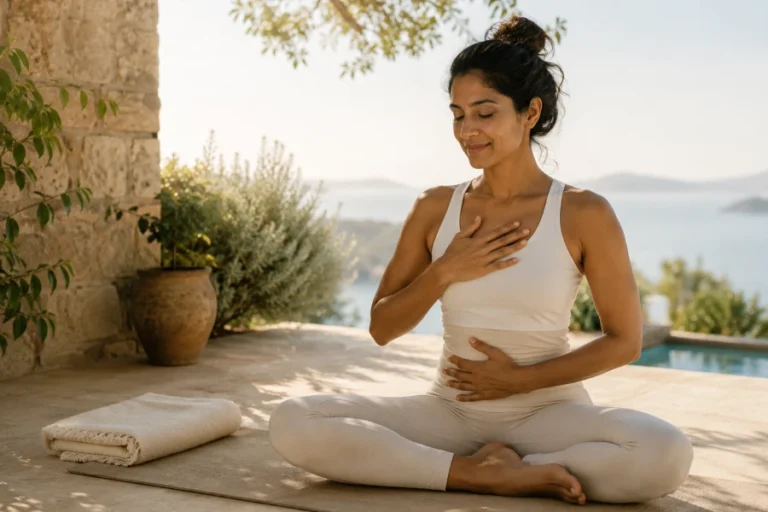
The exhale is often easier to notice than the inhale. Let it lengthen only if that feels comfortable. A soft sigh or quiet hum can help some people feel the breath leave. Do not force a pattern. Instead, give yourself one simple cue: finish the exhale. This practice can become more approachable through this single action. A calming breathwork routine offers a simple structure when your mind wants clarity. Keep your shoulders loose and your jaw soft. Let the next inhale happen without a demand. A comfortable breath is more useful than a perfect one.
Visual clutter can make a crowded mind feel even busier. Turn your body toward a calmer corner of the room. Soften your gaze rather than closing your eyes if that feels safer. Choose one object with a quiet shape. Let it become your visual anchor for a few breaths. Remove only what is easy to remove. You do not need to reset the entire room. Even one clear surface can change the mood. This is not about making life look perfect. It is about reducing input for a moment; less visual demand can make your next choice easier.
Movement can help before stillness feels possible. Roll your shoulders, sway side to side, or take a slow walk across the room. Let the movements stay gentle and repetitive. A mindful movement practice can give restless energy a safe direction. You are not trying to stretch deeply. You are giving the body something simple to do. Notice whether movement creates even a small sense of space. If it does, continue for another minute. If it does not, make the movement smaller. The body gets to set the volume; that is part of the practice.
When thoughts multiply, sensations can be easier to work with than ideas. Feel the texture of your clothing. Notice the temperature of the air near your arms. Press your palms together and release. These details are ordinary, which makes them useful. You do not need to interpret them. Let them be exactly what they are. A simple sensory focus can interrupt the pressure to explain every feeling. It can also help the body return to the present moment. Keep the attention gentle; you are observing, not grading; that distinction reduces pressure inside the practice.
You can practice without a mat. Try slow heel lifts at a counter or a supported forward fold at a chair. Let your back lengthen only as far as comfortable. Standing can be useful when sitting still feels too exposed. This approach can work in a kitchen, office, or quiet hallway. Use body scan prompts as short cues to notice your feet, shoulders, hands, and breath. Keep the sequence short enough to remember. Familiarity makes it easier to use during a real moment of overwhelm. Even a slight shift can make the next moment easier. The most helpful routine is the one you can access when life is loud.
A gentle exit matters as much as a gentle start. Do not spring directly into messages, tasks, or decisions. Stand still for one more breath. Notice whether your attention changed even slightly. Then choose one small next action. Drink water, open a window, or write down the single task that matters now. The practice does not need to erase overwhelm to be useful. It can simply reduce the sharpest edge. That smaller gap gives you more choice. Carry the slower pace into the next five minutes; the transition is part of the reset.
Build the habit before the hardest moment arrives. Try the same two-minute sequence at a predictable time each day. Morning, lunch, or after work can all work. Repetition teaches the body what to expect. A home yoga reset can become a familiar signal that the day has a pause built in. Keep the setup uncomplicated. Let your routine feel more like a doorway than an assignment. When overwhelm shows up, you will not need to invent a new strategy. You will have a small, practiced option ready. That readiness is quietly powerful.
No short practice has to carry the whole day. It only needs to give you a more workable next moment. Keep the movements easy, the breath comfortable, and the expectations modest. Let standing, sitting, or walking all count. Choose an anchor that feels real rather than forced. Return before your thoughts become completely crowded. Over time, these tiny resets may become easier to recognize. They can also make support feel more accessible. Take what helps and leave what does not. A flexible practice can meet you where you are; that is why it can last.



Leave a comment